
The Sable Wharf shares practical, down-to-earth guidance on uk inland waterways and waterside living for readers across the UK.
- 0123456789
- Angle Bd Abdelmoumen & rue soumaya, Résidence
- [email protected]
The Sable Wharf shares practical, down-to-earth guidance on uk inland waterways and waterside living for readers across the UK.
 By James Whitcombe
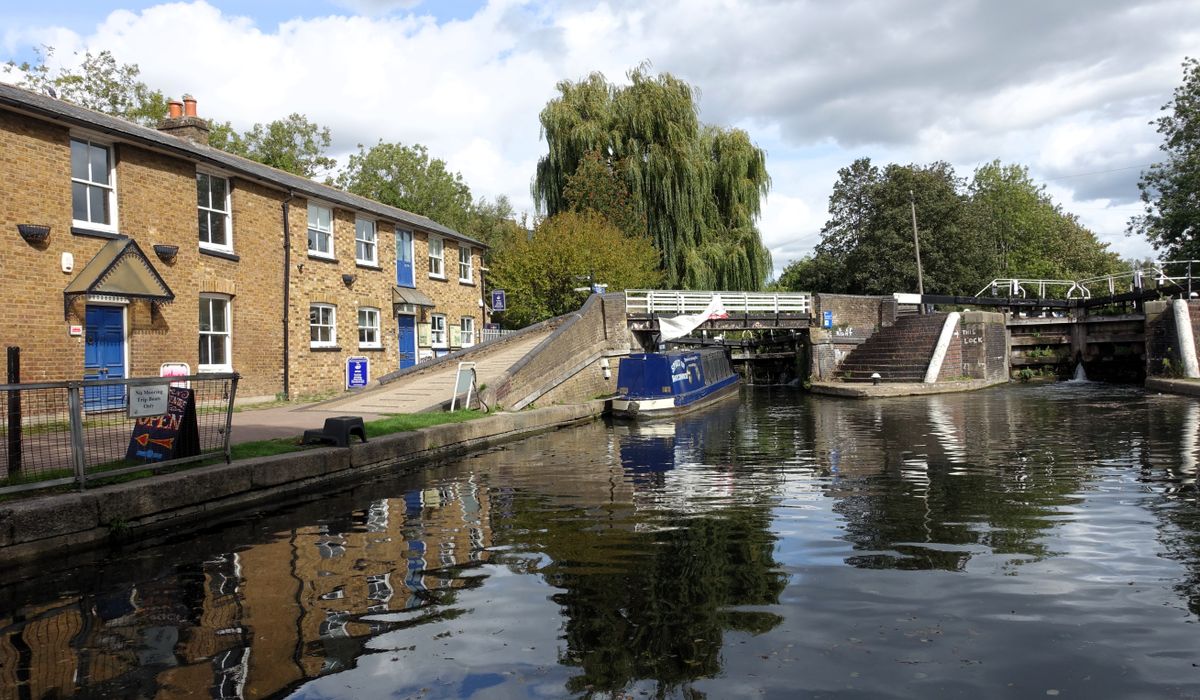
Every time you watch a narrowboat rise in a lock, you are watching one of the most successful pieces of civil engineering ever devised. The principle has not changed in more than two centuries: a chamber of water, sealed at both ends, allows a boat to be lifted or lowered from one level of canal to the next. No pumps, no engines, no electricity required. Just gravity, water and a few well-balanced gates. Understanding how those gates work turns a routine passage into something far more satisfying. You begin to notice the details — the creak of a balance beam, the rush of water through a paddle, the moment the boat floats free.
A lock is essentially a rectangular box with a gate at each end. The upper gate holds back the higher pound; the lower gate holds back the lower pound. When both are closed, the chamber between them is a sealed compartment. The magic lies in the paddles — small sliding valves built into the gates or the chamber walls. Open a paddle and water flows in or out, changing the level inside the chamber until it matches the level beyond one of the gates. Then that gate can be opened and the boat moves on.
Approaching a lock, send a crew member ahead to set it. If the lock is empty and you are going uphill, close the bottom gates and paddles, then open the ground paddles at the top. Water enters, the chamber fills. Once the levels are equal, push the top gate open and bring the boat in. Close the gate behind you. Now open the bottom paddles — gently — and the boat sinks. When the lower gates can be opened, you leave. Reverse the process if you are going downhill. The whole dance takes perhaps ten minutes, less with practice.
Some canals climb hills in a single flight of locks, one after another, like steps in a staircase. The Caen Hill flight on the Kennet & Avon has 29 locks in just over two miles; Tardebigge on the Worcester & Birmingham has 30. In a conventional flight, each lock has its own pound between the gates. In a staircase lock, the bottom gate of one lock is the top gate of the next. Bingley Five Rise and Chester's three-rise are famous examples. Staircases save water but demand careful teamwork — you cannot fill one chamber without emptying another.
Water conservation has always mattered. Side ponds, found on parts of the Grand Union Canal, act as reservoirs. When emptying a lock, the first rush of water is diverted into a side pond rather than wasted downstream. When filling, that water is drawn back. It is a simple, elegant recycling system that can save nearly half the water in a passage.
Early lock gates were operated by hand, often by lock keepers who lived in the cottage beside the chamber. Horse boats would wait while the keeper or the boat crew worked the paddles. The gear was wooden, then iron, then steel. Many locks still use a rack-and-pinion mechanism: you put a windlass on the paddle spindle and turn. On some canals, hydraulic rams now do the work — push a lever and the gate swings open. But the underlying mechanics remain identical. Even the materials have barely changed: English oak, greenheart, and steel are still used for gates, chosen for strength and resistance to rot. A well-built gate can last thirty years or more.
Experienced boaters develop a feel for locks. They know that a strong bywash current near the lower gates can push a boat off course. They watch the cill like a hawk when descending. They learn to open paddles slowly, especially gate paddles, so the boat does not surge forward on a wave. They listen for the change in tone as the chamber fills. And they appreciate the sheer cleverness of it all: a system designed for horse-drawn cargo that still works perfectly for a modern leisure boat. Next time you pass through a flight, take a moment to look at the joinery, the ironwork, the worn stones. You are using a machine that has outlasted the industry it was built for — and it still works beautifully.


We are not gonna make spamming
