
The Sable Wharf shares practical, down-to-earth guidance on uk inland waterways and waterside living for readers across the UK.
- 0123456789
- Angle Bd Abdelmoumen & rue soumaya, Résidence
- [email protected]
The Sable Wharf shares practical, down-to-earth guidance on uk inland waterways and waterside living for readers across the UK.
 By Oliver Bramley
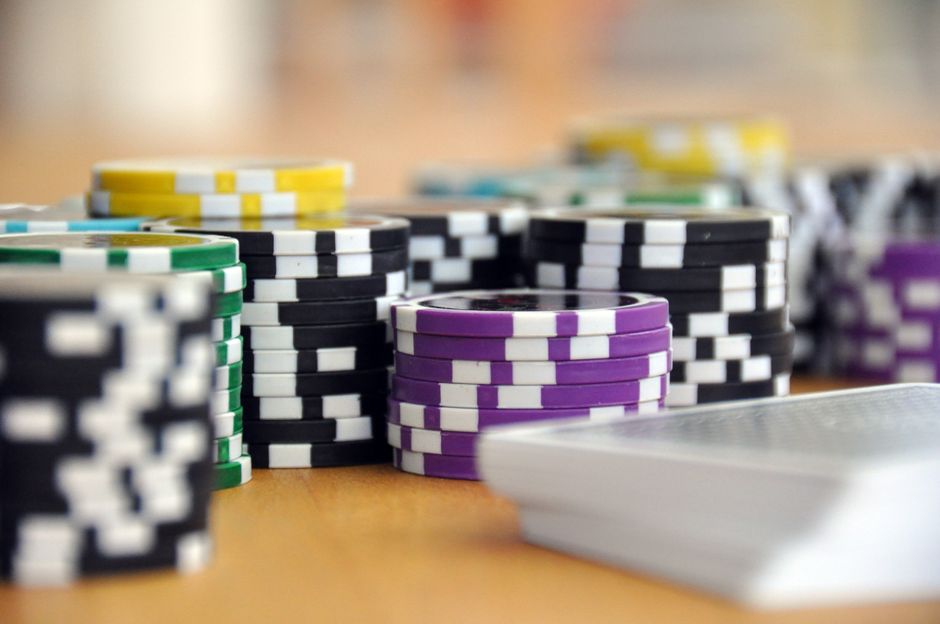
Ask ten gamblers what separates a winner from a loser and you'll get ten different answers. Some swear it's all variance. Others insist the pros have cracked some hidden code. The truth sits somewhere in the uncomfortable middle, and it changes dramatically depending on whether you're spinning slots, playing poker, or sweating a parlay on a Sunday afternoon. Understanding that spectrum isn't just academic — it directly affects where you should put your money and how you should manage your bankroll.
Not all iGaming is created equal. The mathematical DNA of a game determines how much your decisions matter versus how much the random number generator decides for you.
This matters because it dictates what "getting better" even means. In slots, improvement is impossible in the short term. In poker, it's the entire game. Confusing the two is how people lose money they shouldn't.
Here's a counterintuitive truth: even in games of pure chance, strategy exists — it just lives outside the reels. You can't influence a spin, but you can influence everything around it.
None of this turns slots into a profitable endeavor. It just makes the experience less expensive and, frankly, less stressful.
Poker is the one major iGaming vertical where long-term profit is genuinely achievable for a dedicated player. The reason is simple: you're not playing against the house. You're playing against other humans, and the operator takes a small rake regardless of who wins.
That structural difference is enormous. In a six-max $1/$2 no-limit hold'em game, a skilled player can realistically win 5 to 10 big blinds per 100 hands. That's less than most people imagine, but it compounds. A player winning 7bb/100 at $2/$5 across 30,000 hands a year is looking at roughly $10,500 in profit before rakeback and bonuses.
The flip side is that poker punishes leaks mercilessly. Playing too many hands preflop, calling too much on the river, and failing to adjust to table dynamics will bleed a bankroll faster than any slot machine ever could. Modern solver tools and tracking software like Hold'em Manager have raised the baseline skill level dramatically. Winning at micro-stakes in 2024 requires the kind of discipline that would have crushed $5/$10 games fifteen years ago. สล็อต goes into the finer points.
Sports betting sits awkwardly between skill and luck. Over a single weekend, variance dominates. Over a full season, sharp bettors with superior models and information consistently beat closing lines.
What actually separates sharp bettors from the recreational crowd?
The get-rich-quick mindset kills more bankrolls than bad luck ever will.
Ask any winning player across any vertical and bankroll management shows up as the common thread. The math is different for each discipline, but the principle is identical: never risk money that can hurt you, and size your bets so that even a brutal downswing doesn't end your run.
For poker, a standard rule is 20 to 30 buy-ins for cash games and 100 buy-ins for tournaments. For sports betting, many sharps recommend 1% to 2% of bankroll per play. Slots players should treat their entire session bankroll as expendable entertainment money — no exceptions.
The psychology here is brutal but necessary. When you're on a 15-buy-in downswing in poker — which happens to winning players more often than they'd like to admit — the only thing keeping you in the game is that you prepared for it. The players who didn't prepare are the ones who tilt off their last $500 on a slot machine trying to "win it back."
Licensed jurisdictions like the UK, Malta, and a growing number of US states have pushed operators toward better tools: deposit limits, reality checks, self-exclusion registries, and mandatory RTP disclosures. These are genuine improvements. A player in New Jersey can check a game's RTP before playing. A player in the UK gets automatic session reminders.
Where regulation falls short is education. Most new players don't understand the house edge, the difference between RTP and volatility, or why a 96% RTP slot still drains a bankroll on a bad night. That gap is filled by affiliate sites with mixed incentives — some genuinely helpful, others pushing the highest-paying referral links regardless of quality.
The takeaway for players is simple: verify everything. Check licensing, read RTP tables, and treat marketing copy with the skepticism it deserves.
If you want to make money in iGaming, poker and sports betting offer mathematically viable paths — difficult ones, but real. If you want entertainment, slots and casino table games deliver it beautifully, provided you accept that the house is the long-term beneficiary and budget accordingly. The worst outcome is pretending you're in the first category when your behavior puts you firmly in the second. Know which game you're playing, know why you're playing it, and never let the lights and sounds convince you that luck is a strategy.


We are not gonna make spamming
